Short answer
Hummus is made of cooked chickpeas, tahini (sesame paste), lemon juice, garlic and salt, finished with olive oil. The tahini and long blending give hummus its creamy texture, and toppings such as paprika or whole chickpeas are added on top.
Hummus is made of five main ingredients: cooked chickpeas, tahini, lemon juice, garlic and olive oil, plus salt. What hummus is made of explains its taste, since the chickpeas give body, the tahini adds a creamy nutty note, the lemon and garlic bring sharpness, and the olive oil finishes the dip.
What is hummus?
Hummus is a Middle Eastern dip of blended chickpeas and tahini, seasoned with lemon juice and garlic. The word hummus means chickpeas in Arabic, and the full dish name is hummus bi tahini.
It is eaten across Lebanon, Syria, Palestine, Israel, Jordan, Turkey and beyond, often as part of a meze spread. The exact origin is disputed, and several countries in the region claim it as their own. In the United States, hummus is also sold as a refrigerated supermarket dip, with many added flavors.
What are the five ingredients in hummus?
The five core ingredients in hummus are chickpeas, tahini, lemon juice, garlic and olive oil, with salt to taste. Each has a clear job in the finished dip.
| Ingredient | What it does | Typical amount for 4 servings |
|---|---|---|
| Chickpeas | Base and body | 1 1/2 cups cooked |
| Tahini | Creaminess and nutty flavor | 1/4 to 1/3 cup |
| Lemon juice | Sharp, fresh acidity | 3 to 4 tablespoons |
| Garlic | Savory bite | 1 to 2 cloves |
| Olive oil | Richness and finish | 2 tablespoons, plus more to serve |
| Salt | Seasoning | 1/2 teaspoon, to taste |
Many cooks also add a little ground cumin and a few spoonfuls of ice-cold water, which are not always counted among the five.
What is tahini, and why does hummus need it?
Tahini is a smooth paste of ground sesame seeds, and it is the ingredient that makes hummus creamy. Without it, the dip is a thick chickpea puree with a plain, bean-like taste.
Tahini varies by brand. A good one is pourable, pale and mild. A bitter or very dark one makes the hummus taste harsh, so taste it first. Stir the jar well before measuring, because the oil separates and settles on top.
How do you make hummus step by step?
Hummus is made by blending tahini and lemon first, then adding garlic, then the chickpeas, and finishing with cold water until smooth. The tahini-first order produces a lighter, whipped result.
- Blend 1/3 cup tahini with 3 tablespoons lemon juice for one minute, until thick and pale.
- Add 1 or 2 cloves of garlic, 1/2 teaspoon salt and 1/2 teaspoon cumin, and blend again.
- Add 1 1/2 cups of very soft cooked chickpeas, and blend for 2 minutes.
- With the machine running, add 2 to 4 tablespoons of ice-cold water, a spoonful at a time.
- Taste and adjust the salt and lemon.
- Spread in a shallow bowl, make a swirl with a spoon, and top with olive oil.
Why is some hummus smooth and some grainy?
Hummus is smooth when the chickpeas are cooked very soft, the tahini is whipped first and the mix is blended long enough. Grainy hummus is usually the result of undercooked chickpeas or too little blending.
Three habits help:
- Cook dried chickpeas until they crush easily between two fingers. A pinch of baking soda in the cooking water softens them further.
- Rub off the loose skins if you want an extra-smooth result, or simply keep blending for longer.
- Use ice-cold water, not oil, to loosen the dip, which gives it a fluffy texture.
Dried or canned chickpeas: which works better?
Both work. Dried chickpeas, soaked and cooked until very soft, give the creamiest hummus, but canned chickpeas are quicker and still make a good dip.
If you use canned chickpeas, drain them, keep a little of the liquid, and simmer them for 15 to 20 minutes with a pinch of baking soda so they soften. One 15-ounce can makes about 1 1/2 cups, which is enough for a small bowl of hummus. Dried chickpeas, about 3/4 cup dry, give a similar amount once cooked.
What are the traditional hummus toppings?
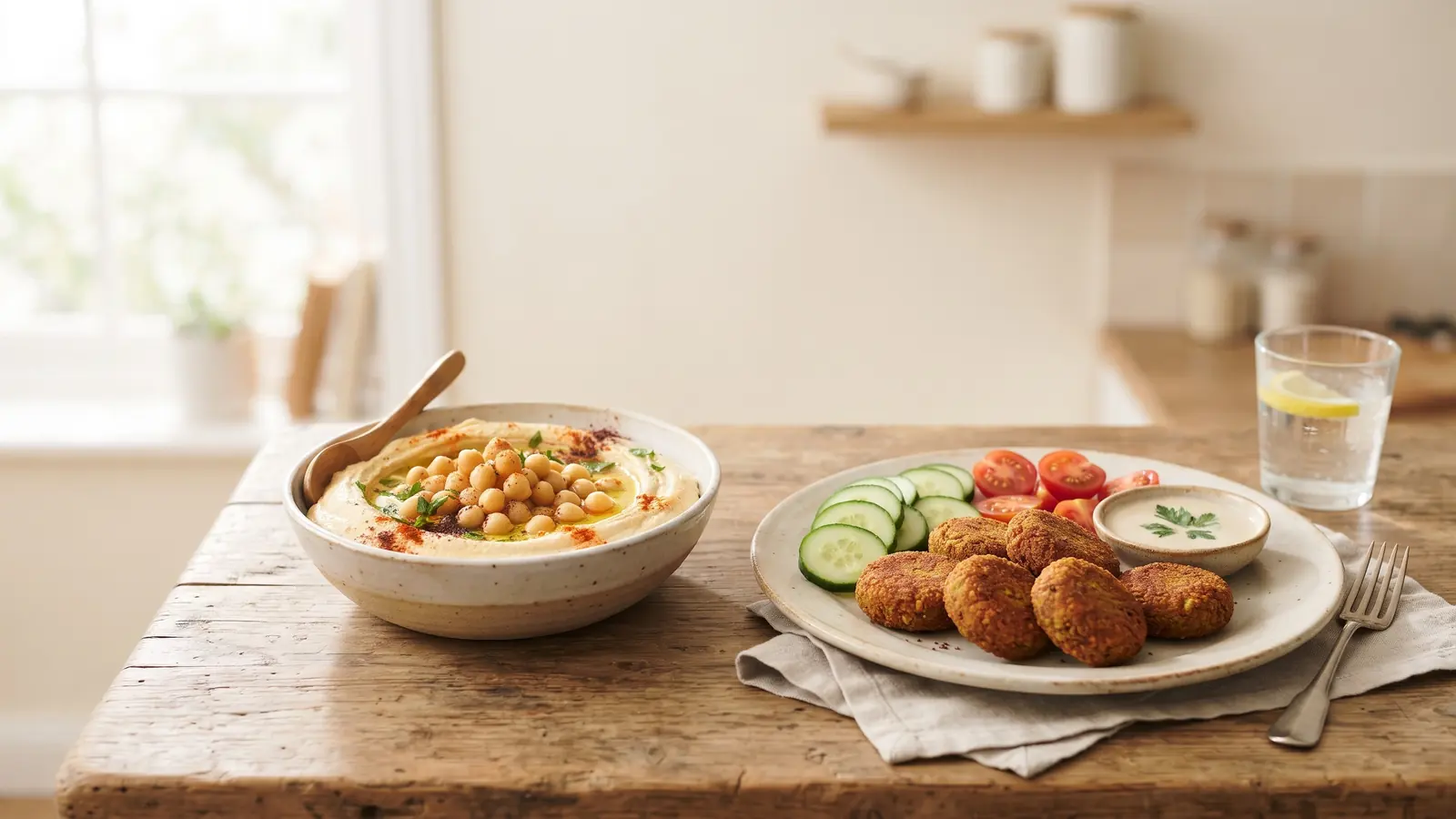
The traditional toppings for hummus are a pool of olive oil, paprika or sumac, chopped parsley and a few whole chickpeas. Heavier versions add spiced ground beef or lamb with toasted pine nuts.
Other common toppings include pickled chili, za’atar, whole cooked fava beans (a dish called ful and hummus), and a spoonful of tahini sauce. Hummus is eaten scooped up with warm pita, spread inside a sandwich, or served beside falafel and salad.
What does the Heights Falafel menu say about hummus?
The Heights Falafel menu lists hummus as a pita sandwich and as a plate, and most of its other plates come with hummus alongside. The menu describes it only as chickpea and tahini puree.
On the online ordering page as of November 2026, the Hummus Sandwich is $7 and the Hummus Plate is $12.50. Most plates come with rice, a side salad and hummus, while the Special Falafel Plate comes with salad and hummus but no rice. The menu does not give the hummus recipe, toppings or serving size. See the full menu and prices page, or call the shop using the number on the hours and location page for details.
How should you store hummus?
Hummus keeps in a covered container in the fridge for about four days when homemade, and the date on the lid when it is store-bought. A thin layer of olive oil on top slows drying.
Hummus can be frozen for a few months, though it may separate on thawing. Stir it vigorously, add a little lemon juice or water, and drizzle fresh olive oil before serving. Let hummus sit at room temperature for 20 minutes before eating, since cold dulls the flavor.
What are the common hummus mistakes?
The most common hummus mistakes are undercooked chickpeas, bitter tahini, too little lemon and serving it ice cold. Each is easy to fix once you know what to look for.
- Chickpeas that are still firm leave a gritty dip. Cook them until they mash between two fingers.
- Old or scorched tahini tastes bitter. Smell and taste a little before using the jar.
- Too much garlic overwhelms the dip. One clove is plenty for a small batch, and raw garlic strengthens as the hummus sits.
- A dip that is too thick needs cold water, a spoonful at a time, not more oil.
- Cold hummus tastes flat, so let it stand at room temperature before serving.
What is the difference between hummus and baba ganoush?
Hummus is made from chickpeas, while baba ganoush is made from charred eggplant, and both use tahini, lemon and garlic. Hummus is thicker and milder, and baba ganoush is softer, smokier and looser.
The two dips often appear side by side on a meze table or a mixed plate. Hummus has a neutral, nutty base that suits many toppings, whereas baba ganoush gets its character from the smoky flesh of the roasted eggplant.
Common questions
What does hummus mean?
Hummus is the Arabic word for chickpeas. The full name of the dip is hummus bi tahini, meaning chickpeas with tahini. Outside the Arab world, the word hummus usually refers to the blended dip.
Is tahini necessary in hummus?
In the classic Middle Eastern dip, yes. Tahini gives hummus its creamy body and nutty taste. A chickpea puree without tahini is a different dish, closer to a bean dip or a mashed chickpea spread.
Why is my hummus grainy?
Grainy hummus usually comes from undercooked chickpeas, skins left on, or too little blending. Cook the chickpeas until very soft, add a few spoonfuls of cold water, and blend for several minutes.
How long does homemade hummus last?
Homemade hummus keeps for about four days in a covered container in the fridge. Spread a thin layer of olive oil on top to keep the surface from drying out, and stir before serving.
Can you make hummus without a food processor?
Yes, though the texture is rougher. Mash well-cooked chickpeas with a potato masher or fork, or use a blender, then beat in the tahini, lemon and garlic by hand. Add cold water until it turns smooth.
Everything practical is on the home page: Heights Falafel hours, menu and directions.
This article is general information from an independent guide, not from Heights Falafel itself. For the store’s current details see hours and location.